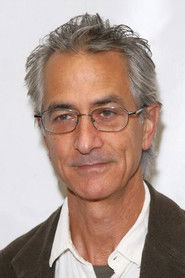
David Strathairn movie quotes
63 quotes from 9 movies
Good Night, and Good Luck. (2005) as Edward R. Murrow
View Quote
Referring to a Julius Caesar quote said by Senator McCarthy Had Senator McCarthy looked just three lines earlier he would have found this: "The fault dear Brutus, is not in our stars but in ourselves...”
View Quote
Funny thing, Freddie, every time you light a cigarette for me, I know you're lying.
View Quote
Let us dream to the extent of saying that on a given Sunday night the time normally occupied by Ed Sullivan is given over to a clinical survey of the state of American education, and a week or two later the time normally used by Steve Allen is devoted to a thoroughgoing study of American policy in the Middle East.
The Bourne Ultimatum (2007) as Noah Vosen
View Quote
I wanna know what he's gonna think before he does, every dirty little secret he has.
View Quote
Where the hell is he, people?
View Quote
You know as well as I do decisions made in real time are never perfect. Don't second-guess an operation from an armchair.
Lincoln (2012) as William Seward
View Quote
William Seward: Why wasn't I consulted?! I'm Secretary of State! You, you, you informally send a reactionary dotard, to— What will happen, when these peace commissioners arrive?
Abraham Lincoln: We'll hear 'em out.
William Seward: Oh, splendid! And next the Democrats will invite them up to hearings on the Hill, and the newspapers — well, the newspapers — the newspapers will ask why risk enraging the Confederacy over the issue of slavery when they're here to make peace? We'll lose every Democrat we've got, more than likely conservative Republicans will join them, and all our work, all our preparing the ground for the vote, laid waste, naught for naught.
Abraham Lincoln: The Blairs have promised support for the amendment if we listen to these people—
William Seward: Oh, the Blairs promise, do they? You think they'll keep their promise once we have heard these delegates and refused them? Which we will have to do, since their proposal most certainly will be predicated on keeping their slaves!
Abraham Lincoln: What hope for any Democratic votes, William, if word gets out that I've refused a chance to end the war? You think word won't get out? In Washington?
William Seward: It's either the amendment or this Confederate peace, you cannot have both.
Abraham Lincoln: "If you can look into the seeds of time, and say which grain will grow and which will not, speak then to me..."
William Seward: Oh, disaster. This is a disaster.
Abraham Lincoln: Time is a great thickener of things, William.
William Seward: Yes, I suppose it is — Actually, I have no idea what you mean by that.
Abraham Lincoln: Get me thirteen votes. [in thick Kentucky accent] Them fellers from Richmond ain't here yet.
View Quote
Alexander Stephens: Let me be blunt. Will the Southern states resume their former position in the Union speedily enough to enable us to to enable us to block ratification of this here Thirteenth Amendment?
Abraham Lincoln: I'd like peace immediately.
Alexander Stephens: Yes, and...?
Abraham Lincoln: I'd like your states restored to their practical relations immediately.
Alexander Stephens: If this could be given me in writing, as Vice President of the Confederacy, I'd bring that document with celerity to Jefferson Davis.
William Seward: Surrender and we can discuss reconstruction.
Alexander Stephens: Surrender won't be thought of unless you've assured us, in writing, that we'll be readmitted in time to block this amendment.
Robert Hunter: This is the arrogant demand of a conqueror for a humiliating, abject—
William Seward: You'll not be conquered people, Mr. Hunter. You will be citizens, returned to the laws and the guarantees of rights of the Constitution.
Alexander Stephens: Which now extinguishes slavery. And with it our economy. All our laws will be determined by a Congress of vengeful Yankees, all our rights will be subject to a Supreme Court benched by bloody Republican radicals. All our traditions will be obliterated. We won't know ourselves anymore.
Abraham Lincoln: We ain't here to discuss reconstruction, we have no legal basis for that discussion. But I don't want to deal falsely. The Northern states will ratify, most of 'em. As I figure, it remains for two of the Southern states to do the same, even after all are readmitted. And I've been working on that.
Alexander Stephens: [grudgingly nodding] Tennessee and Louisiana.
Abraham Lincoln: Arkansas, too, most likely. It'll be ratified. Slavery, sir, it's done. [Hunter silently stands and leaves the room] If we submit ourselves to law, Alex, even submit to losing freedoms—the freedom to oppress, for instance—we may discover other freedoms previously unknown to us. Had you kept faith with democratic process, as frustrating as that can be—
John Campbell: Come, sir, spare us at least these pieties. Did you defeat us with ballots?
Alexander Stephens: How have you held your union together? Through democracy? How many hundreds of thousands have died during your administration? Your Union, sir, is bonded in cannon fire and death.
Abraham Lincoln: It may be you're right. But say all we done is show the world that democracy isn't chaos, that there is a great, invisible strength in a people's union? Say we've shown that a people can endure awful sacrifice and yet cohere? Mightn't that save at least the idea of democracy, to aspire to? Eventually to become worthy of? At all rates, whatever may be proven by blood and sacrifice must've been proved by now! Shall we stop this bleeding?
View Quote
Abraham Lincoln: Thunder forth, God of War.
Edwin Stanton: We'll commence our assault on Wilmington from the sea... Why is is this burned? Was the boy playing with it?
Abraham Lincoln: It got took by a breeze several nights back.
Edwin Stanton: This is an official War Department map!
William Seward: And the enire cabinet's waiting to hear what it portends.
Gideon Welles: A bombardment. From the largest fleet the Navy's ever assembled.
Abraham Lincoln: Old Neptune, shake thy hoary locks.
Gideon Welles: Fifty-eight ships are underway, of every tonnage and firing range.
Edwin Stanton: We'll keep up a steady barrage. Our first target is Fort Fisher. It defends Wilmington port.
James Speed: A steady barrage?
Edwin Stanton: A hundred shells a minute. Till they surrender.
William Fessenden: Dear God.
Abraham Lincoln: Wilmington's their last open seaport. Therefore...
Edwin Stanton: Wilmington falls, Richmond falls after.
William Seward: And the war... is done.
John Usher: Then why, if I may ask are we not concentrating the nation's attention on Wilmington? Why, instead, are we reading in the Herald that the anti-slavery amendment is being precipitated on the House floor for debate—because your eagerness, in what seems an unwarranted intrusion of the Executive into Legislative prerogatives, is compelling it to its... to what's likely to be it's premature demise? You signed the Emancipation Proclamation, you've done all that can be expected—
James Speed: The Emancipation Proclamation's merely a war measure. After the war the courts will make a meal out of it.
John Usher: When Edward Bates was Attorney General, he felt confident in it enough to allow you to sign—
James Speed: Different lawyers, different opinions. It frees slaves as a military exigent, not in any other—
Abraham Lincoln: I don't recall Bates being any too certain about the legality of my Proclamation, just it wasn't downright criminal. Somewhere's in in between. Back when I rode the legal circuit in Illinois, I defended a woman from Metamora named Melissa Goings, 77 years-old. They said she murdered her husband, he was 83. He was choking her and she grabbed a-hold of a stick of firewood and fractured his skull and he died. In his will he wrote: 'I suspect she has killed me. If I get over it, I will have revenge.' No one was keen to see her convicted, he was that kind of husband. I asked the prosecuting attorney if I might have a short conference with my client. And she and I went into a room in the courthouse, but I alone emerged. The window in the room was found to be wide open. It was believed the old lady may have climbed out of it. I told the bailiff right before. I left her in the room she asked me where she could get a good drink of water, and I told her Tennessee. Mrs. Goings was seen no more in Metamora. Enough justice had been done; they even forgave the bondsman her bail.
John Usher: I'm afraid I don't see—
Abraham Lincoln: I decided that the Constitution gives me war powers, but no one knows just exactly what those powers are. Some say they don't exist. I don't know. I decided I needed them to exist to uphold my oath to protect the Constitution, which I decided meant that I could take the rebel's slaves from them as property confiscated in war. That might recommend to suspicion that I agree with the Rebs that their slaves are property in the first place. Of course I don't, never have, I'm glad to see any man free, and if calling a man property, or war contraband, does the trick... Why I caught at the opportunity. Now here's where it gets truly slippery. I use the law allowing for the seizure of property in a war knowing it applies only to the property of governments and citizens of belligerent nations. But the South ain't a nation, that's why I can't negotiate with'em. If in fact the Negroes are property according to law, have I the right to take the rebels' property from 'em, if I insist they're rebels only, and not citizens of a belligerent country? And slipperier still: I maintain it ain't our actual Southern states in rebellion but only the rebels living in those states, the laws of which states remain in force. The laws of which states remain in force. That means, that since it's states' laws that determine whether Negroes can be sold as slaves, as property - the Federal government doesn't have a say in that, least not yet then Negroes in those states are slaves, hence property, hence my war powers allow me to confiscate'em as such. So I confiscated 'em. But if I'm a respecter of states' laws, how then can I legally free 'em with my Proclamation, as I done, unless I'm cancelling states' laws? I felt the war demanded it; my oath demanded it; I felt right with myself; and I hoped it was legal to do it, I'm hoping still. Two years ago I proclaimed these people emancipated - "then, hence forward and forever free." But let's say the courts decide I had no authority to do it. They might well decide that. Say there's no amendment abolishing slavery. Say it's after the war, and I can no longer use my war powers to just ignore the courts' decisions, like I sometimes felt I had to do. Might those people I freed be ordered back into slavery? That's why I'd like to get the Thirteenth Amendment through the House, and on its way to ratification by the states, wrap the whole slavery thing up, forever and aye. As soon as I'm able. Now. End of this month. And I'd like you to stand behind me. Like my cabinet's most always done. As the preacher once said, I could write shorter sermons but once I start I get too lazy to stop.
John Usher: It seems to me, sir, you're describing precisely the sort of dictator the Democrats have been howling about.
James Speed: Dictators aren't susceptible to law.
John Usher: Neither is he! He just said as much! Ignoring the courts? Twisting meanings? What reins him in from, from...
Abraham Lincoln: Well, the people do that, I suppose. I signed the Emancipation Proclamation a year and a half before my second election. I felt I was within my power to do it; however I felt that I might be wrong to do it; I knew the people would tell me. I gave 'em a year and a half to think about it. And they re-elected me. And come February the first, I intend to sign the Thirteenth Amendment.
Zootopia 2 (2025) as Milton
View Quote
Milton: Brian! [to Cattrick; shoves him] Go!
Mayor Winddancer: You say justice is dead? [punches Cattrick and Kitty to the floor] I say... NEIIIIIGH! [jump-kicks Milton in the face]
Mayor Winddancer: You say justice is dead? [punches Cattrick and Kitty to the floor] I say... NEIIIIIGH! [jump-kicks Milton in the face]
View Quote
Milton: My grandpa had a dream to build a city for all animals,...
Judy: [hears clamor across the room, seeing Chief Bogo dragging Nick out of the gala] Nick...?
[Before Judy could react, Nick kicks the spotlight to the chandelier, blinding the robed figure, which Judy looks up to notice]
Milton: ...to truly be better together... [the robed figure falls off the chandelier and lands on the stage, startling him] Ugh!
[Chief Bogo's attention turns to the guests watching the robed figure, revealing himself to be a blue pit viper. Judy, Nick, and Chief Bogo watch in shock as the viper named Gary De'Snake reveals himself in front of everyone at the Zootennial Gala]
Mayor Winddancer: THERE'S A SNAKE!!!!!
[The Zootopians start running and screaming with the Zebros escorting Winddancer to safety]
Zebros: Snake! Snake! Snake!
Gene Zebraxton: [as he rudely shoves one of Gazelle's tiger backup dancers] Go, Bro! Go!
Gazelle: [angered] I will remember you, Zebra!
[Gary grabs Milton and slithers away with him and the contained journal. Judy watches the snake carrying both Milton and the journal, while the guests are running in fear, Judy frees her own ears as she chases Gary]
View Quote
[Outside the destroyed Honeymoon Lodge, officers Chèvre and Bücheron bring a paw-cuffed Nick, who is glaring daggers, in front of Hoggbottom and Mayor Winddancer.]
Hoggbottom: Mayor Winddancer?
Mayor Winddancer: [approaches Nick and removes his shades; about Judy] Where's the bunny?
Nick: [snarkily] I dunno. But, you know, she's a rabbit, so maybe you can pull her out of your hat.
Mayor Winddancer: [pauses] I'm not wearing a hat.
Hoggbottom: [whispering] He's messing with you, sir.
Mayor Winddancer: [dismissively] I knew that! Get him out of here!
[Officers Bücheron and Chèvre throw Nick in the prison van and slam the doors shut.]
Milton: [approaches Nick] Where are they, Mr. Wilde? [Nick turns away in denial; to Cattrick] Begin the expansion. Freeze Marsh Market. Flush everyone out.
Nick: [overhears him; worried] No... you can't...
Milton: Water folk, like foxes, are lesser mammals. If I say they helped a dangerous snake, no one will care what we do. [digs his claws in Nick, who groans in pain] You're going to a dark cell, Mr. Wilde, just long enough to read the headline of your partner's demise. [takes his claws off Nick, who glares] You should've left town while you had the chance.
[The prison van drives away with Nick.]
Kitty: [holding a fur sample] Dad. Fur from... [gives the sample] whoever's helping the bunny and the snake.
Milton: [angrily clutches the bag] Find Pawbert!
Eight Men Out (1988) as Eddie Cicotte
View Quote
I always figured it was talent made a man big, you know, if I was the best at something. I mean, we're the guys they come to see. Without us, there ain't a ballgame. Yeah, but look at who's holding the money and look at who's facing a jail cell. Talent don't mean nothing. And where's Comiskey and Sullivan, Attell, Rothstein? Out in the back room cutting up profits, that's where. That's the damn conspiracy.
View Quote
Eddie Cicotte: It's about my bonus, Mr. Comiskey. You promised me a $10,000 bonus if I won 30 games this year and I think I deserve it.
Charles Comiskey: Harry, how many games did Mr. Cicotte win for us this year?
Harry: 29, Mr. Comiskey.
Eddie Cicotte: You told Kid to sit me down the last two weeks of the season to get ready for the series. That cost me five more starts; I know I would have won at least two more games.
Charles Comiskey: We had to get your arm ready for the series.
Eddie Cicotte: I deserve that bonus.
Charles Comiskey: 29 is not 30, Eddie. You will get only the money you deserve.
Eddie Cicotte: It's your ball club Mr. Comiskey.
View Quote
[the Sox have just won the AL penant and are in the clubhouse. Some champagne bottles are sitting on a table]
Eddie Cicotte: What's this, Harry?
Harry: Mr. Comiskey sent these down for you. A congratulations for a successful pennant race.
Eddie Cicotte: That's awfully white of him. He didn't happen to mention when we can expect that bonus he promised us in return for taking the flag, did he?
Harry: This is your bonus.
Swede Risberg: Cheap bastard.
Kid Gleason: Look, fellas, if it was up to me...
Eddie Cicotte: Kid, we got no beef with you. [opens one of the champagne bottles - nothing happens] It's flat.
Sneakers (1992) as Whistler
View Quote
[Carl and Whistler try out Jannek's black box and they surprisingly break into some secure mainframes]
Liz: [upon seeing the data for the Air Traffic Control System] Oh, my God.
Mother: How is this possible?
Whistler: Cryptography systems are based on mathematical problems so complex they cannot be solved without a key.
Liz: Jannek figured out a way to solve those problems without the key and he hard-wired it into that chip.
Martin Bishop: Turn it off.
Whistler: Want to crash some passenger jets?
Bishop: I said turn it off. Turn it off. [shuts down computer]
Carl: [contemplates] So, it's a code-breaker.
Bishop: No, it's The code-breaker. No more secrets. [leaves]
View Quote
Bishop: Carl?
Carl: [to Bernard Abbot] The, uh, young lady with the Uzi, is she single?
Bishop: Uh, you know, Carl. [sets Carl aside] Carl, this is the brass ring. Now you've got to think bigger thoughts.
Carl: I just want her telephone number, that's all. Please?
Bishop: Hey Abby, how about a lunch? You can chaperon.
Bernard Abbot: No, I will not do this. [Male NSA agents smirk]
Bishop: Hey, Abby, Abby, come on, now the FBI'd give him twins-
Abbot: NO!
NSA Agent Mary: Wait a second. You can have anything you want, and you're asking for my phone number?
Carl: Yes.
NSA Agent Mary: 273-9164. Area code 415.
Carl: Thanks. I'm Carl. [offers hand]
NSA Agent Mary: [smiles while shaking Carl's hand] I'm Mary.
Abbot: I'm going to be sick. Are we done here?
Bishop: Not yet. Whistler?
Whistler: I want peace on earth and good will toward man.
Abbot: Oh, this is ridiculous.
Bishop: He's serious.
Whistler: I want peace on earth and goodwill toward men.
Abbot: We are the United States Government! We don't do that sort of thing.
Bishop: You're just gonna have to try.
Abbot: All right, I'll see what I can do.
Whistler: Thank you very much. That's all I ask.
View Quote
[At the gang's hideout, Crease is on the phone with a contact in the wake of discovering that Jannek was killed the night before]
Donald Crease: Don't tell me you can't do it because I know you can. And don't tell me you won't do it because I've got to have it. I need to know, and I need to know now.
Mother: Guys, that federal building's been scheduled for demolition since August. Housed the Federal Trade Commission and Department of Agriculture. Been vacant for a month.
Carl Arbogast: [checks out the Yellow Pages] The NSA never had an office in San Francisco. Their West Coast operations are out of Los Angeles.
Crease: [shocked] Oh, God. Yeah, thanks. [hangs up] Jannek's grant is from the NSA. [throws phone in disgust; to Marty] How could you be so goddamn stupid?!? Two guys show up, say they're government, and you just buy it.
Whistler: They probably were government [everybody looks at him] - just not ours.
Martin Bishop: Everybody pack up whatever you can. This place isn't safe. [gets revolver]
Mother: What are you doing?
Bishop: I'm going to a concert.
A Midsummer Night's Dream (1999) as Theseus
View Quote
No epilogue, I pray you, for your play needs no excuse. Never excuse, for when the players are all dead, there need none to be blamed.
View Quote
Merry and tragical? Tedious and brief? That is hot ice and wondrous strange snow.
View Quote
Theseus: The iron tongue of midnight hath told twelve: Lovers, to bed; 'tis almost fairy time.
Oberon: Now, until the break of day.Through this house each fairy stray.To the best bride-bed will we,Which by us shall blessed be;So shall all the couples three.Ever true in loving be;And the owner of it blest.Ever shall in safety rest.Trip away; make no stay;Meet me all by break of day.
Oberon: Now, until the break of day.Through this house each fairy stray.To the best bride-bed will we,Which by us shall blessed be;So shall all the couples three.Ever true in loving be;And the owner of it blest.Ever shall in safety rest.Trip away; make no stay;Meet me all by break of day.
Godzilla (2014) as Admiral Stenz
View Quote
Admiral Stenz: This "alpha predator" of yours, doctor...do you really think it has a chance?
Dr. Serizawa: The arrogance of man is thinking nature is in our control...and not the other way around. Let them fight.
Dr. Serizawa: The arrogance of man is thinking nature is in our control...and not the other way around. Let them fight.
View Quote
[Watching the other MUTO wreck havoc on the news]
Dr. Graham: It's almost 300 feet. It's much bigger than the other one.
Admiral Stenz: This one doesn't have any wings.
Graham: A different sex?
Dr. Serizawa: A female.
Graham: THAT'S who he's been talking to.
Serizawa: It must be a mating call. The female remained dormant until the male matured.
Graham: Now they're seeking radiation...to reproduce!
View Quote
Admiral Stenz: Prep the warheads and get them moving to the coast. [to Dr. Serizawa] I know you don't agree with this. But my first priority is to safeguard our citizens. [a distraught Dr. Serizawa shows Admiral Stenz his pocket watch] It's stopped.
Dr. Serizawa: Yes. Eight-fifteen in the morning, August 6, 1945.
Stenz: Hiroshima.
Serizawa: It was my father's...
Dr. Serizawa: Yes. Eight-fifteen in the morning, August 6, 1945.
Stenz: Hiroshima.
Serizawa: It was my father's...
Matewan (1987) as Sid Hatfield
View Quote
I've met Mr. Felts. I wouldn't piss on him if his heart was on fire.
View Quote
I take care of my people. You bring 'em trouble, and you're a dead man. Sleep tight, Kenehan.
 This product uses the TMDB API but is not endorsed or certified by TMDB.