
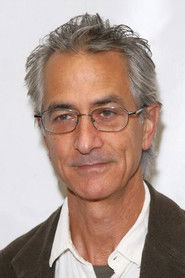
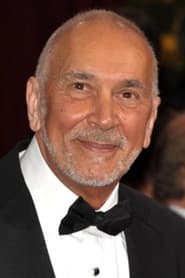

"Good Night, and Good Luck" couldn't be more unlikely, more unfashionable or more compelling. Everything about it stands in stark opposition to the trends of the moment. Yet by sticking to events that are half a century old, it tells a story whose implications for today are inescapable. "Good Night" is a marvel of classic restraint in a hopped-up film culture. Shot in elegant black and white and featuring impeccable acting, it exists because of the lonely passion of director and co-star George Clooney... the son of a TV anchorman. That made him determined to examine in some detail the stand CBS newsman Edward R. Murrow took in 1954 against Senator Joseph McCarthy. Clooney had the nerve to believe that a drama of ideas could be as entertaining as "Desperate Housewives." He insisted that a fight for America's soul, a clash of values over intellectual issues like freedom of the press, had an intensity that would carry everything before it, and it does.
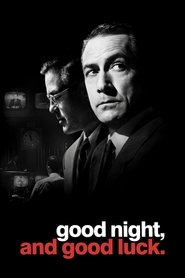
Most scenes together: Edward R. Murrow & William Paley (9), Fred Friendly & William Paley (7), Edward R. Murrow & Fred Friendly (6)
Good Night, and Good Luck. quotes
Page 1 of 3 Colonel Anderson:
Wouldn't you guess that the people who have seen the contents of that envelope might have a better idea of what makes someone a danger to his country, or do you think it should just be you, sir, who decides?
Who? Who? Who are these people, sir? Who are the people? Are they elected? Are they appointed? Is it you?
 Don Hollenbeck:
I could use a scotch.
I think everyone could use a scotch.
Did you know that Shirley and Joe are married?
Yeah.
Did everybody know?
He's gonna hope a senator trumps a newsman.
He'll lose.
: Not if we're playing bridge.
We'll split the advertising, Fred and I. He just won't have any presents for his kids at Christmas.
 Sig Mickelson:
He's a Jew.
Well don't tell him that. He loves Christmas.
What'd the general have to say?
It was a colonel. Two of them.
That makes a general.
You always were yellow.
Better than red.
Did you write your closing piece?
It's Shakespeare.
Uh-huh. Write your closing piece.
Shirley, honey, would you go across the street and get the early editions?
 Shirley Wershba:
All of them?
Just get O'Brian.
Shirley Wershba: Name me one woman who asks her husband to take off his wedding ring before he goes to work.
 Joe Wershba:
Ava Gardner.
There's a Knickerbocker game tonight, I've got front row seats. Are you interested?
I'm a little busy bringing down the network tonight, Bill.
Epilogue: I began by saying that our history will be what we make it. If we go on as we are, then history will take its revenge, and retribution will not limp in catching up with us. Let us dream to the extent of saying that on a given Sunday night the time normally occupied by Ed Sullivan is given over to a clinical survey of the state of American education, and a week or two later the time normally used by Steve Allen is devoted to a thoroughgoing study of American policy in the Middle East. Would the corporate image of their respective sponsors be damaged? Would the stockholders rise up in their wrath and complain? Would anything happen other than that a few million people would have received a little illumination on subjects that may well determine the future of this country, and therefore the future of the corporations? To those who say people wouldn't look; they wouldn't be interested; they're too complacent, indifferent and insulated, I can only reply: There is, in one reporter's opinion, considerable evidence against that contention. But even if they are right, what have they got to lose? Because if they are right, and this instrument is good for nothing but to entertain, amuse and insulate, then the tube is flickering now and we will soon see that the whole struggle is lost. This instrument can teach, it can illuminate; yes, and it can even inspire. But it can do so only to the extent that humans are determined to use it to those ends. Otherwise it is merely wires and lights in a box. Good night, and good luck.
Prolouge: This just might do nobody any good. At the end of this discourse a few people may accuse this reporter of fouling his own comfortable nest, and your organization may be accused of having given hospitality to heretical and even dangerous thoughts. But the elaborate structure of networks, advertising agencies and sponsors will not be shaken or altered. It is my desire, if not my duty, to try to talk to you journeymen with some candor about what is happening to radio and television. If what I have to say is responsible, then I alone am responsible for the saying of it. Our history will be what we make it. And if there are any historians about fifty or a hundred years from now, and there should be preserved the kinescopes for one week of all three networks, they will there find recorded in black and white, or color, evidence of decadence, escapism and insulation from the realities of the world in which we live. We are currently wealthy, fat, comfortable and complacent. We have currently a built-in allergy to unpleasant or disturbing information. Our mass media reflect this. But unless we get up off our fat surpluses and recognize that television in the main is being used to distract, delude, amuse and insulate us, then television and those who finance it, those who look at it and those who work at it, may see a totally different picture too late.
Referring to a Julius Caesar quote said by Senator McCarthy Had Senator McCarthy looked just three lines earlier he would have found this: "The fault dear Brutus, is not in our stars but in ourselves...”