

All of these things -- All of these things you know. You should also know at the outset that, in the manner of witnesses before Congressional committees, I appear here voluntarily -- by invitation; that I am an employee of the Columbia Broadcasting System; that I am neither an officer nor any longer a director of that corporation; and that these remarks are strictly of a "do-it-yourself" nature. If what I have to say is responsible, then I alone am responsible for the saying of it. Seeking neither approbation from my employers, nor news sponsors, nor acclaim from the critics of radio and television, I cannot very well be disappointed.
Edward R. Murrow
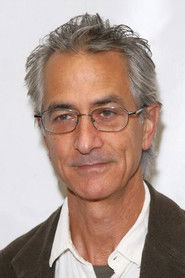
David Strathairn · 23 quotes
William Paley
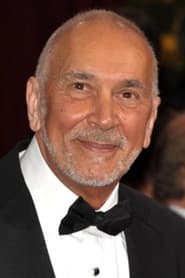
Frank Langella · 13 quotes
Fred Friendly
George Clooney · 10 quotes
Joseph McCarthy
2 quotes
Most scenes together: Edward R. Murrow & William Paley (9), Fred Friendly & William Paley (7), Edward R. Murrow & Fred Friendly (6)
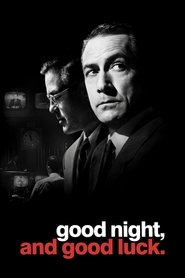
Good Night, and Good Luck. quotes
Page 2 of 3Believing that potentially the commercial system of broadcasting as practiced in this country is the best and freest yet devised, I have decided to express my concern about what I believe to be happening to radio and television. These instruments have been good to me beyond my due. There exists in my mind no reasonable grounds for any kind of personal complaint. I have no feud, either with my employers, any sponsors, or with the professional critics of radio and television. But I am seized with an abiding fear regarding what these two instruments are doing to our society, our culture, and our heritage.
Funny thing, Freddie, every time you light a cigarette for me, I know you're lying.
Good evening. Mr. Edward R. Murrow, Educational Director of the Columbia Broadcasting System, devoted his program to an attack on the work of the United States Senate Investigating Committee, and on me personally as its chairman, and over the past four years he has made repeated attacks upon me and those fighting Communists.
I have no technical advice or counsel to offer those of you who labor in this vineyard, the one that produces words and pictures. You will, I am sure, forgive me for not telling you that the instruments with which you work are miraculous, that your responsibility is unprecedented, or that your aspirations are frequently frustrated. It is not necessary to remind you of the fact that your voice, amplified to the degree where it reaches from one end of the country to the other, does not confer upon you greater wisdom than when your voice reached only from one end of the bar to the other.
I'm terrified of waking up at 65 years old, which is getting closer, and to wake up and say I didn't do the things that I was supposed to do... as a citizen... As someone who is well-known... I can help bring focus... And I try to, as a son of a journalist, when I take on those causes, to be really well informed so that they can't marginalize you or make you an idiot along the way.
I'm with you today Ed, and I'm with you tomorrow.
In the movie, Murrow, played by David Strathairn, decides to expose the tactics of McCarthy by using senator's own words. Murrow's boss, William Paley, the legendary head of CBS, is by turn supportive and plenty worried about the impact the report will have on his network. But Paley would relent and the program aired, intensifying a public outcry against McCarthy. In late 1954, the senator was censured by his colleagues in the U.S. Senate.
There is inevitably a political side to a film that looks at a period of history in which many Americans then and now believe civil liberties were threatened in the hunt for communists.
Let us dream to the extent of saying that on a given Sunday night the time normally occupied by Ed Sullivan is given over to a clinical survey of the state of American education, and a week or two later the time normally used by Steve Allen is devoted to a thoroughgoing study of American policy in the Middle East.
Might as well go down swinging.
Murrow and his reporting staff discovered Senator McCarthy was exploiting U.S. Air Force Reserve Lieutenant Milo Radulovich. Lieutenant Radulovich’s father, John, and his sister, Mrs. Margaret Fishman, were labeled communist sympathizers; and their close association with him caused a backlash. Without a trial, Radulovich was labeled a security risk by Senator McCarthy’s committee and lost his commission in the Reserves.Murrow and his staff found Senator McCarthy’s tactics and methodology questionable and decided to interview Lieutenant Radulovich on Murrow’s news documentary television show “See It Now.” Murrow’s broadcast drew attention to Radulovich’s plight and he was reinstated into the Air Force Reserves. McCarthy was given an opportunity for a rebuttal on “See It Now.” During the March 1954 episode, McCarthy questioned Murrow’s loyalties and labeled him a Communist sympathizer as well. Murrow’s staff was placed under close scrutiny. Faced with pressure from the CBS network to let the matter rest or lose sponsors, he and his staff decided it was imperative they point out the errors in McCarthy’s claims. McCarthy’s support waned after Murrow’s broadcast.
Murrow taking on McCarthy was one of the great high points in broadcast journalism, along with Cronkite stepping out from behind his desk and talking about how Vietnam doesn't work were two moments in broadcast journalism that you could point directly to and say actually changed American policy... I don't know a reporter that doesn't want to break a big news story. It is constantly the battle between commerce and news, or keeping entertainment from pushing the news off the air... I was looking to open a debate, to have a discussion, to be able to talk about issues that I think are important. It's simply saying, as Murrow says in the film, we have to find a way to find a safe place between the protection of the individual and the protection of the state at the same time.
My cards. You lose, what happens? Five guys find themselves out of work. I'm responsible for a hell of a lot more than five god damned reporters. Let it go. McCarthy will self-destruct.
No one familiar with the history of his country, can deny that congressional committees are useful. It is necessary to investigate before legislating. But the line between investigating and persecuting is a very fine one, and the Junior Senator from Wisconsin has stepped over it repeatedly. His primary achievement has been confusing the public mind as between the internal and the external threats of communism. We must not confuse dissent from disloyalty. We must remember always, that accusation is not proof, and that conviction depends upon evidence and due process of law. We will not walk in fear, one of another, we will not be driven by fear into an age of unreason. If we dig deep into our history and our doctrine, we will remember we are not descended from fearful men. Not from men who feared to write, to speak, to associate, and to defend causes that were, for the moment, unpopular. This is no time for men who oppose Sen. McCarthy's methods to keep silent or for those who approve. We can deny our heritage and our history but we cannot escape responsibility for the result. There is no way for a citizen of the republic to abdicate his responsibilities. As a nation we have come into our full inheritance at a tender age. We proclaim ourselves as indeed we are, the defenders of freedom where ever it still exists in the world. But we cannot defend freedom abroad by deserting it at home. The actions of the Junior Senator from Wisconsin have caused alarm and dismay amongst our allies abroad and given considerable comfort to our enemies. And who's fault is that? Not really his, he didn't create this situation of fear he merely exploited it, and rather successfully. Cassius was right, the fault dear Brutus is not in our stars, but in ourselves. Good night, and good luck.
Now, ordinarily--I would not take time out from the important work at hand to answer Murrow. However, in this case, I feel justified in doing so because Murrow is a symbol,a leader and the cleverest of the jackal pack which is always found at the throat of anyone who dares to expose individual Communists and traitors.