


On March 9, 1954, in a broadcast that has been called television’s finest hour... The show prompted more than 10,000 phone calls and 70,000 letters and telegrams — 15 to 1 in favor of Murrow. On the street, truck drivers yelled out, “Good show, Ed!” On December 2, 1954, the Senate formally reprimanded McCarthy by a vote of 67 to 22 for conduct unbecoming a senator. In speaking truth to power, Murrow hastened McCarthy’s downfall and may have been pivotal in it.
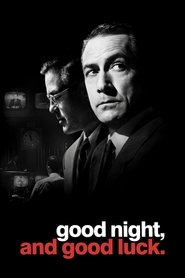
Good Night, and Good Luck functions on several levels. It is a cautionary tale about unrestrained political power and its use of public hysteria. It is also a tribute to the power of a dissenting media to expose and correct injustice. As such, the movie reproaches today’s journalism that embraces safety.
Most scenes together: Edward R. Murrow & William Paley (9), Fred Friendly & William Paley (7), Edward R. Murrow & Fred Friendly (6)
Good Night, and Good Luck. quotes
Page 3 of 3speech to the Radio and Television News Directors Association, at the beginning and end of the film
Stonewall Jackson, who is generally believed to have known something about weapons, is reported to have said, "When war comes, you must draw the sword and throw away the scabbard." The trouble with television is that it is rusting in the scabbard during a battle for survival.
Thank you for your patience.
The issues raised in the film, where to draw the line between reporting and editorializing, and the balance of news and entertainment in the media company, are still with us today.
There's no news, boys, so go out there and make some news. Rob a bank, mug an old lady, whatever - just do something.
This instrument can teach; it can illuminate; yes, and even it can inspire. But it can do so only to the extent that humans are determined to use it to those ends. Otherwise it's nothing but wires and lights in a box. There is a great and perhaps decisive battle to be fought against ignorance, intolerance, and indifference. This weapon of television could be useful.
Turn the phones on!
We cannot defend freedom abroad by deserting it at home.
We have currently a built-in allergy to unpleasant or disturbing information. Our mass media reflect this. But unless we get up off our fat surpluses and recognize that television in the main is being used to distract, delude, amuse, and insulate us, then television and those who finance it, those who look at it, and those who work at it, may see a totally different picture too late.
We will not walk in fear, one of another.
We're going with this story. Because the terror is right here in this room.