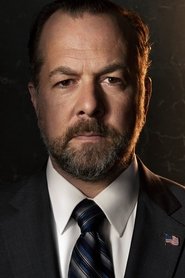
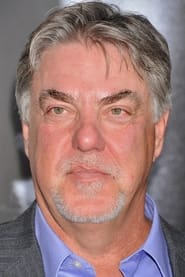
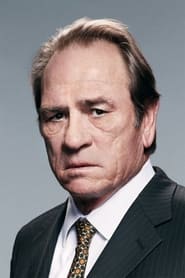
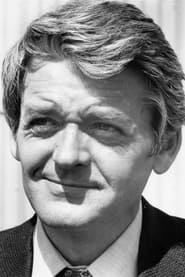
 Preston Blair
We've managed our members to a fare-thee-well, you've had no defections from the Republican right to trouble you, whereas to what you promised— where the hell are the commissioners?!
Oh my God, it's true. You... you lied to me, Mr. Lincoln! You evaded my requests for a denial that, that there is a Confederate peace offer because, because there is one! We are absolutely guaranteed to lose the whole thing and we'll be discredited, the amendment itself will be tainted. What if, what if these peace commissioners appear today? Or worse, on the morning—
 Montgomery Blair
We don't need a goddamned abolition amendment! Leave the Constitution alone! State by state you can extirpate—
[pounds his hand on the table, silencing them both]
I can't listen to this anymore. I can't accomplish a goddamn thing of any human meaning or worth until we cure ourselves of slavery and end this pestilential war, and whether any of you or anyone else knows it, I know I need this! This amendment is that cure! We're stepped out upon the world stage now, now, with the fate of human dignity in our hands. Blood's been spilled to afford us this moment! Now! Now! Now! And you grouse so and heckle and dodge about like pettifogging Tammany Hall hucksters! See what is before you! See the here and now! That's the hardest thing, the only thing that accounts! Abolishing slavery by constitutional provision settles the fate for all coming time. Not only of the millions now in bondage, but of unborn millions to come. Two votes stand in its way. These votes must be procured!
We need two yeses. Three abstentions. Four yeses and one more abstention and the amendment will pass.
You've got a night and a day and a night and several perfectly good hours! Now get the hell out of here and get them!
Buzzard's guts, man. I am the President of the United States of America, clothed in immense power! You will procure me these votes.
 Pvt. Harold Green
Some of us was in the 2nd Kansas Colored. We fought the rebs at Jenkins' Ferry last April, just after they'd killed every Negro soldier they captured at Poison Springs. So at Jenkins' Ferry, we decided weren't taking no reb prisoners. And we didn't leave a one of 'em alive. The ones of us that didn't die that day, we joined up with the 116th U.S. Colored, sir. From Camp Nelson Kentucky.
What's your name, soldier?
Pvt. Harold Green Private Harold Green, sir.
 Cpl. Ira Clark
I'm Corporal Ira Clark, sir. Fifth Massachusetts Cavalry. We're waiting over there. We're leaving our horses behind, and shipping out with the 24th Infantry for the assault next week on Wilmington.
How long have you been a soldier?
Cpl. Ira Clark Two year, sir.
Second Kansas Colored Infantry, they fought bravely at Jenkins' Ferry.
Pvt. Harold Green That's right, sir.
Cpl. Ira Clark They killed a thousand rebel soldiers, sir. They were very brave. And making three dollars less each month than white soldiers.
Pvt. Harold Green Us 2nd Kansas boys, whenever we fight now we-
Cpl. Ira Clark Another three dollars subtracted from our pay for our uniforms.
Pvt. Harold Green That was true, yessir, but that's changed-
Cpl. Ira Clark Equal pay now. Still no commissioned Negro officers.
I am aware of it, Corporal Clark.
Cpl. Ira Clark Yes, sir, that's good you're aware, sir. It's only that-
Pvt. Harold Green You think the Wilmington attack is gonna be-
Cpl. Ira Clark Now that white people have accustomed themselves to seeing Negro men with guns, fighting on their behalf, and now that they can tolerate Negro soldiers getting the same pay - in a few years perhaps they can abide the idea of Negro lieutenants and captains. In fifty years, maybe a Negro colonel. In a hundred years...the vote.
[short pause]
What will you do after the war, Corporal Clark?
Cpl. Ira Clark Work, sir. Perhaps you'll hire me.
Cpl. Ira Clark But you should know, sir, that I get sick at the smell of boot-black, and I cannot cut hair.
I've yet to find a man who could cut mine so's it'd make any difference.
Pvt. Harold Green You've got springy hair for a white man.
[chuckling]
I do. My last barber hanged himself. [Green laughs] And the one before that. Left me his scissors in his will.
I wish you'd been present.
LH Lydia Hamilton Smith
I wish I'd been.
LH Lydia Hamilton Smith
You can't bring your housekeeper to the House. I won't give them gossip. This is enough. This is... it's more than enough for now.
Read it to me again, my love.
LH Lydia Hamilton Smith
Proposed.
LH Lydia Hamilton Smith
Adopted. An amendment to the Constituion of the United States. Section One. Neither slavery nor involuntary servitude, except as a punishment for crime whereof the party shall have been duly convicted, shall exist within the United States, or any place subject to their jurisdiction.
LH Lydia Hamilton Smith
Congress shall have power to enforce this amendment by appropriate legislation.
 Ulysses S. Grant
Gentlemen, I suggest you work some changes to your proposal before you give it to the President.
RM R.M.T. Hunter
We're eager to be on our way to Washington.
AH Alexander H. Stephens
Did Mr. Lincoln tell you to tell us this?
Ulysses S. Grant It says, 'securing peace for our two countries'. And it goes on like that.
AH Alexander H. Stephens
I don't know what you–
Ulysses S. Grant There's just one country. You and I, we're citizens of that country. I'm fighting to protect it from armed rebels. From you.
AH Alexander H. Stephens
But Mr. Blair told us, he, he told President Jefferson Davis we were–
Ulysses S. Grant A private citizen like Preston Blair can say what he pleases, since he has no authority over anything. If you want to discuss peace with President Lincoln, consider revisions.
AH Alexander H. Stephens
If we're not to discuss a truce between warring nations, what in heaven's name can we discuss?
Ulysses S. Grant Terms of surrender.
Even if every Republican in the House votes yes, far from guaranteed, since when has our party unanimously supported anything? But say all our fellow Republicans vote for it, we'd still be twenty votes short.
Only twenty? We can find twenty votes.
Twenty House Democrats who will vote to abolish slavery? In my opinion...
To which I always listen.
With all three of my ears.
We'll win the war, sir. It's inevitable, isn't it?
You'll begin your second term, with semi-divine stature. Imagine the possibilities peace will bring. Why tarnish your invaluable luster with a battle in the House? It's a rats' nest in there. The same gang of talentless hicks and hacks who rejected the amendment ten months ago; we'll lose.
Why wasn't I consulted?! I'm Secretary of State! You, you, you informally send a reactionary dotard, to— What will happen, when these peace commissioners arrive?
Oh, splendid! And next the Democrats will invite them up to hearings on the Hill, and the newspapers — well, the newspapers — the newspapers will ask why risk enraging the Confederacy over the issue of slavery when they're here to make peace? We'll lose every Democrat we've got, more than likely conservative Republicans will join them, and all our work, all our preparing the ground for the vote, laid waste, naught for naught.
The Blairs have promised support for the amendment if we listen to these people—
Oh, the Blairs promise, do they? You think they'll keep their promise once we have heard these delegates and refused them? Which we will have to do, since their proposal most certainly will be predicated on keeping their slaves!
What hope for any Democratic votes, William, if word gets out that I've refused a chance to end the war? You think word won't get out? In Washington?
It's either the amendment or this Confederate peace, you cannot have both.
"If you can look into the seeds of time, and say which grain will grow and which will not, speak then to me..."
Oh, disaster. This is a disaster.
Time is a great thickener of things, William.
Yes, I suppose it is — Actually, I have no idea what you mean by that.
Get me thirteen votes. [in thick Kentucky accent] Them fellers from Richmond ain't here yet.
[last lines, from Second Inaugural speech]
Fondly do we hope, fervently do we pray, that this mighty scourge of war may speedily pass away. Yet, if God wills that it continue until all the wealth piled by the bondsman's two hundred and fifty years of unrequited toil shall be sunk, and until every drop of blood drawn with the lash shall be paid by another drawn with the sword, as was said three thousand years ago, so still it must be said "the judgments of the Lord are true and righteous altogether." With malice toward none, with charity for all, with firmness in the right as God gives us to see the right, let us strive on to finish the work we are in, to bind up the nation's wounds, to care for him who shall have borne the battle and for his widow and his orphan, to do all which may achieve and cherish a just and lasting peace among ourselves and with all nations.
[pounds his hand on a table as his cabinet squabbles]
I can't listen to this anymore. I can't accomplish a goddamn thing of any human meaning or worth until we cure ourselves of slavery and end this pestilential war, and whether any of you or anyone else knows it, I know I need this! This amendment is that cure! We're stepped out upon the world stage now, now, with the fate of human dignity in our hands. Blood's been spilled to afford us this moment! Now! Now! Now! And you grouse so and heckle and dodge about like pettifogging Tammany Hall hucksters!
Euclid's first common notion is this: "Things which are equal to the same thing are equal to each other." That's a rule of mathematical reasoning. It's true because it works; has done and will always will do. In his book, Euclid says this is "self-evident." You see, there it is, even in that two-thousand year old book of mechanical law: it is a self-evident truth of things which are equal to the same thing, are equal to each other. We begin with equality. That's the origin, isn't it? That balance—that's fairness, that's justice.