
If you went to the C.I.A. and said "How is the situation today in South Vietnam?" I think they would say it's worse. You see it in the desertion rate, you see it in the morale. You see it in the difficulty to recruit people. You see it in the gradual loss of population control. Many of us in private would say that things are not good, they've gotten worse. Now while we say this in private and not public, there are facts available that find their way in the press. If we're going to stay in there, if we're going to go up the escalating chain, we're going to have to educate the people, Mr. President. We haven't done so yet. I'm not sure now is exactly the right time.
This conversation was also taped by Johnson, on June 9, 1964.
More from The Fog of War
Robert McNamara I formed the hypothesis that each of us could have achieved our objectives without the terrible loss of life. And I wanted to test that by going to Vietnam.
McNamara, on his 1995 meeting in Vietnam with the former Foreign Minister of Vietnam Robert McNamara We all make mistakes. We know we make mistakes. I don't know any military commander, who is honest, who would say he has not made a mistake. There's a wonderful phrase: 'the fog of war.' What "the fog of war" means is: war is so complex it's beyond the ability of the human mind to comprehend all the variables. Our judgment, our understanding, are not adequate. And we kill people unnecessarily. Robert McNamara The major lesson of the Cuban missile crisis is this: the indefinite combination of human fallibility and nuclear weapons will destroy nations. Is it right and proper that today there are 7500 offensive strategic nuclear warheads, of which 2500 are on a 15 minute alert to be lauched at the decision of *one* human being?
McNamara, on his 1995 meeting in Vietnam with the former Foreign Minister of Vietnam Robert McNamara We all make mistakes. We know we make mistakes. I don't know any military commander, who is honest, who would say he has not made a mistake. There's a wonderful phrase: 'the fog of war.' What "the fog of war" means is: war is so complex it's beyond the ability of the human mind to comprehend all the variables. Our judgment, our understanding, are not adequate. And we kill people unnecessarily. Robert McNamara The major lesson of the Cuban missile crisis is this: the indefinite combination of human fallibility and nuclear weapons will destroy nations. Is it right and proper that today there are 7500 offensive strategic nuclear warheads, of which 2500 are on a 15 minute alert to be lauched at the decision of *one* human being?
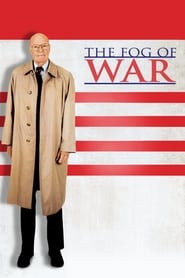
The Fog of War
All The Fog of War quotes →
All The Fog of War quotes →